 is here! Shop now, pay later in 4 easy installments


Last Updated: October 29, 2026
Quick Summary
Choosing the right shin guards for Muay Thai comes down to three variables: measured fit, coverage level and closure design. Measure shin length from kneecap to foot top and calf circumference at its widest, then pass the at-home fit test before judging padding. Match padding to your training frequency and sparring intensity.
- Measure shin length from the centre of the kneecap to the top of the foot, plus calf circumference at its widest.
- In the at-home fit test, the top edge should stay below the kneecap when you bend the knee to 90 degrees.
- If you fall between sizes, size up for sparring and down for pad work and bag work.
- Strapped guards with dual hook-and-loop closures typically hold position better during kick-heavy sparring.
- Wipe the lining after every session and air-dry fully, never leaving guards sealed in a gym bag overnight.
Table of Contents
- How to Choose Shin Guards for Muay Thai: The Decision Framework
- How to Measure for Shin Guards
- Sizing and Fit: Reading a Size Chart and the At-Home Fit Test
- Coverage: Knee, Shin, Instep and Ankle Protection
- Padding and Protection Levels: Matching Guards to Training Intensity
- Mobility, Weight and Speed: Why Bulk Costs You Rounds
- Strapped vs Slip-On Shin Guards
- Best Muay Thai Shin Guards for Sparring and Competition
- How to Stop Shin Guards Slipping During Training
- Hygiene, Drying and Replacement: Making Guards Last
- Frequently Asked Questions
How to Choose Shin Guards for Muay Thai: The Decision Framework
Choosing the right shin guards for Muay Thai comes down to three variables: measured fit, coverage level and closure design. Get those three right and the rest is detail. Get them wrong and you will spend every session adjusting straps instead of throwing kicks.
Beginners often buy on colour or price, then replace the guards within months. The framework below helps you avoid that. We start with measurement, move through coverage and padding, then close on design and care.
Below, we will show you exactly how to measure, test fit at home, and match a guard to your training frequency.
Shin guards are protective equipment worn over the shin and instep to absorb impact from kicks, checks and blocks during Muay Thai, kickboxing and MMA training. The design you choose affects how well they stay in place under load.
How to Measure for Shin Guards
Measure shin length from the centre of the kneecap to the top of the foot, then measure calf circumference at its widest point. Record both in centimetres.
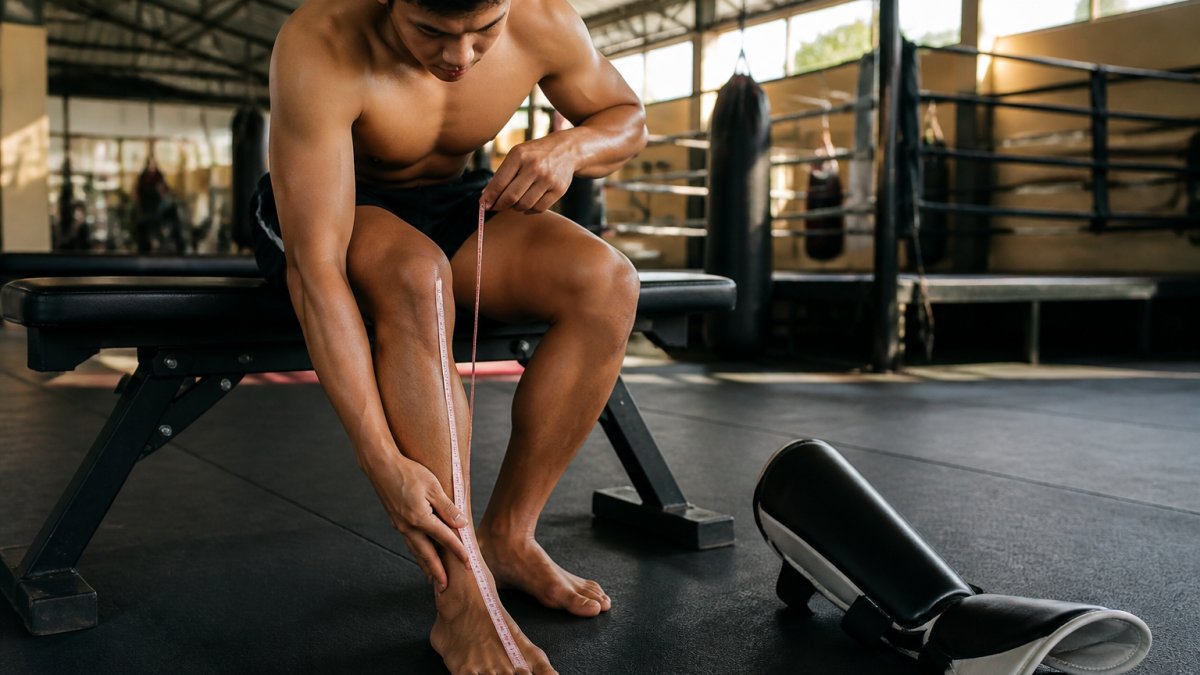
Sizing by height alone is a common mistake, because athletes of the same height can differ by several centimetres in shin length, and a guard that runs long will bunch behind the knee every time you check a kick.
Take the measurement standing, weight evenly distributed, with the leg relaxed rather than flexed. Repeat twice and use the larger figure.
Sizing and Fit: Reading a Size Chart and the At-Home Fit Test
A size chart is only useful when you know which measurement it uses. Some brands publish shin length, others publish height ranges, and many publish both. Read the column heading before you read the number, since charts may list shin length, height or both.
The At-Home Fit Test: Pass or Fail, Not Guesswork
The at-home fit test can catch many fit problems before a session. Strap the guard on over bare skin, not trousers, and work through each check:
- Knee clearance: Stand and bend the knee to roughly 90 degrees. The top edge should stay below the kneecap. If it rides over or pushes into the kneecap, the guard is too long, size down or choose a shorter profile.
- Ankle and instep coverage: Rise onto the balls of your feet ten times. The instep flap should cover the top of the foot without digging into the toes or exposing the ankle bone. If the flap lifts away from the foot, the instep shape is wrong for you.
- Rotation under load: Throw twenty slow kicks with each leg, including ten roundhouses. The guard should not rotate around the calf or slide down the shin. If it twists, the calf strap is too loose or the lining has no grip, try a firmer top strap before changing size.
- Strap retention: Complete the kick set without re-tightening. If any strap needs adjustment mid-set, the closure or size is wrong.
- Skin pressure: Check for red pressure points at the top edge, the ankle crease and the instep after the kick set. Sharp pressure means the shape does not match your leg, even if the length is correct.
If any box fails, the size or shape may not suit your leg. A guard that feels snug standing still can rotate once you sweat, which is why the kick test is a useful check.
Between Sizes: Which Way to Go
If you fall between sizes, the decision depends on use. Size up for sparring and competition, where full coverage and secure closure matter more than a close profile. Size down for pad work and bag work, where a closer fit reduces bulk and keeps the guard from catching on the bag. Never size up to compensate for a narrow calf, a longer guard will still rotate; a strapped design with independent top and bottom tension is the better fix.
Sizing Edge Cases Competitors Skip
Size charts assume an average calf and foot, so consider these adjustments for your own legs:
- Wide or muscular calves: Choose a strapped design with dual closures so you can tension the top and bottom independently.
- Narrow calves or slim ankles: A slip-on that fits the shin length may still gap at the calf. Look for a strapped guard with a shorter strap run, or accept that you will need to tension the top strap firmer than the bottom.
- Wide feet or high insteps: Check the instep flap depth, not just the shin length. A pre-curved instep with a crease at the toe line flexes better over a high instep than a flat flap.
- Long shins with short feet, or the reverse: Measure both shin length and foot length. A guard sized on shin length alone can leave the instep short or overlong.
- Growing athletes: Junior and teenage athletes should re-measure regularly, as a guard that fit at the start of a season may no longer pass the knee-clearance check later on.
Coverage: Knee, Shin, Instep and Ankle Protection
Coverage runs from below the knee to the ankle, and the instep flap is the piece most buyers ignore. Muay Thai checking drills load the shin, but kicks and footwork expose the instep and ankle.
Full shin coverage should extend from just under the kneecap to the top of the foot. Knee coverage varies: some guards stop short deliberately to keep the knee free for clinch work, others extend higher for heavy sparring.
Ankle coverage is usually a by-product of a well-shaped instep rather than a separate feature.
Padding and Protection Levels: Matching Guards to Training Intensity
Padding should scale with training intensity. Heavier padding suits frequent sparring, while lighter padding may suit less frequent training. But before you compare padding thickness, understand what padding can and cannot do.
What Shin Guards Actually Protect Against
Shin guards are designed to absorb and distribute impact during checks, blocks and kicks. What they do not do is eliminate risk. Bruising, stress reactions and, in rare cases, fractures can still occur, particularly when technique is poor or sparring intensity is uncontrolled.
Fit and intensity both affect the load on the shin. Controlled technical sparring at moderate intensity generally places less load on the shin than full-contact rounds, and a well-fitting guard is more likely to stay in place than one that slips.
Matching Padding to Training Frequency
Match the guard to how often you actually train and how hard you spar:
| Training Frequency | Padding Priority | Design Priority | Typical Use |
|---|---|---|---|
| 1-3 sessions per week | Moderate, comfortable | Slim fit, easy entry | Bag work, pad work, drills |
| 3-5 sessions per week | Reinforced shin and sides | Articulated ankle, secure straps | Drills and controlled sparring |
| 5+ sessions per week | Heavy-duty, full coverage | Leather casing, commercial closures | Full-contact sparring, competition prep |
Use the table as a starting point, then adjust for how hard you actually spar. An athlete training three times a week but sparring full-contact needs the protection level of the 5+ row. An athlete training five times a week on pads and bags does not.
Choosing by Experience Level
Experience changes what you need from a guard, not just how much you can afford:
- Beginner (first 6-12 months): Prioritise fit and secure closure over maximum padding, since a guard that stays in place matters more than one with the thickest foam.
- Intermediate (regular sparring): Move to reinforced shin and side padding with an articulated ankle. This is where most athletes settle, because the guard needs to handle controlled sparring several times a week without excess weight.
- Advanced and competition: Full-coverage, heavy-duty guards with a durable casing and commercial-grade closures can suit this level.
The Limits of Protection
No guard prevents injury entirely. Guards absorb and distribute impact, but they do not eliminate the risk of bruising, stress reactions or fractures. Technique and controlled intensity do more for your longevity than any padding level. If you are returning from a shin injury, treat padding as one variable among several and speak to a qualified sports physiotherapist about your training load rather than relying on a heavier guard.
For a premium padded option once you know your level, the SHIN PADS - Black Diamond™ PRECISION PLUS - BLACK pairs reinforced Armadillo™ injected padding over the shins, sides and feet with an articulated ankle joint.
SHIN PADS - Siam™ - LEATHER - WHITE →
Mobility, Weight and Speed: Why Bulk Costs You Rounds
Extra padding adds protection and mass, and that added weight can contribute to fatigue over several rounds. That trade-off applies to any guard.
Range of motion matters most at the ankle. A stiff instep restricts the plantar flex you need for a clean roundhouse, so you end up kicking with the shin angled wrong. Pre-curved, pre-creased designs are intended to help with this.
Weight distribution matters too. A guard that hangs heavy at the ankle pulls the whole leg out of alignment. Simplified designs with lighter casings can keep the profile close to the leg.
Strapped vs Slip-On Shin Guards
Strapped guards use hook-and-loop closures around the calf and typically hold position better during kick-heavy sparring.
Strapped designs can offer security. Dual hook-and-loop straps let you tension the top and bottom independently, which can help if your calf tapers sharply.
Slip-on designs are generally lighter to put on, with nothing to fasten mid-session. If slip-on suits your preference, the Shin Instep Blackdiamond Slip On is a slip-on shin instep guard to consider.
If you want a strapped Muay Thai design, the SHIN PADS - Urban™ MUAY THAI - BLACK - PUNCH EQUIPMENT uses dual hook-and-loop neoprene leg straps for a locked-in fit.
Best Muay Thai Shin Guards for Sparring and Competition
Sparring and competition demand the highest protection level, because the impact is uncontrolled and the sessions are longer. For club-level sparring, the Shin Pads Urban™ Club Muay Thai is a Muay Thai shin pad to consider.
A word of caution: no guard prevents injury entirely. Guards absorb and distribute impact, but they do not eliminate the risk of bruising, stress reactions or fractures.
How to Stop Shin Guards Slipping During Training
Slipping almost always traces to one of three causes: the wrong size, a loose top strap, or a smooth inner lining with nothing to grip. Fix the cause, not the symptom.
Start with the strap tension. Fasten the lower strap first, then the upper, and tension the top slightly firmer than feels natural at rest.
Check the inner lining. Sweat-resistant, anti-slipping linings grip bare skin far better than smooth nylon.
Finally, confirm the length. A guard that runs past the kneecap gets pushed down every time you bend the leg.
Hygiene, Drying and Replacement: Making Guards Last
Hygiene can affect how long guards last. Sweat and bacteria can contribute to wear on inner linings, foam and stitching.
Never leave guards sealed in a gym bag overnight. Damp foam stays damp for days, and that is where odour sets in. Hang them open, lining out, in moving air.
Watch for replacement signs: flattened padding over the shin, cracked or stiff casings, stitching pulling away at the instep, and straps that no longer hold tension.
Casing durability and stitching quality can affect how long a guard lasts, so consider these alongside the initial price.
Frequently Asked Questions
How should Muay Thai shin guards fit?
They should sit snug against the leg with the top edge just below the kneecap and the instep flap covering the top of the foot. You should be able to slide one finger under a strap, no more. When you shake your leg, the guard should not rotate or drop. Guards that feel loose in the shop will slip once you start sweating, so test the fit by doing ten switch kicks and a few checks before you commit.
How do I measure my legs for shin guards?
Use a soft tape measure. Measure from the centre of your kneecap straight down to the top of your foot for shin length, then measure the widest part of your calf for circumference. Compare both numbers against the brand's size chart, because sizing varies between models. If you fall between two sizes, go up for sparring and down for pad work where you want a closer profile.
Are strapped or slip-on shin guards better for Muay Thai?
Strapped guards with hook-and-loop closures suit most Muay Thai training because you can tighten them to your own leg shape and they stay put through kicking drills. Slip-on sleeves are lighter and faster to pull on, which suits bag work and conditioning, but they offer less adjustment and can shift during hard sparring. Beginners and anyone with uneven calf shapes usually do better with strapped designs.
What size shin guards should I get for Muay Thai?
Size follows your shin length and calf circumference, not your height alone. Most adults fall into medium, large or extra large. A guard that is too long rides up into the knee and restricts checking; one that is too short leaves the ankle exposed. Check the product's size chart, measure both legs since they can differ, and size to the larger leg to avoid a tight strap digging in.
Can I use kickboxing shin guards for Muay Thai?
Yes, in most cases. Kickboxing and Muay Thai guards share the same basic shape, covering the shin and instep. The difference is usually padding thickness and how much knee coverage the guard offers. For Muay Thai, prioritise guards with solid instep padding because you will be checking kicks with the shin and striking with the foot. Thinner kickboxing styles are fine for bag work but light for full-contact sparring.
How do I stop my shin guards from slipping during training?
Start with the right size, since most slipping comes from a guard that is too long or too loose. Tighten the top strap first, then the lower strap, and check both before each round. Wear them over bare skin or thin compression sleeves rather than loose socks. If your guards have a pre-curved shin and creased toe flex line, align the crease with your foot so the guard bends where your ankle does.
How much protection do I need in Muay Thai shin guards?
Match padding to training intensity. One to three sessions a week of bag and pad work suits lighter guards. Four or more sessions plus sparring calls for thicker padding across the shin, sides and foot. Competition-grade guards are built for full-contact checking drills. No guard removes impact entirely, so pair good padding with correct technique and a coach who controls sparring intensity.
Getting the fit right is the difference between training and adjusting. PRO FIGHT STORE AUSTRALIA stocks professional-grade shin guards for Muay Thai, kickboxing and MMA, including the Punch Equipment range, with sizes for adults, teens and juniors. Free freight applies on orders over $100.00, and our online store makes it straightforward to compare designs before you commit. Get started with PRO FIGHT STORE AUSTRALIA and train in guards that stay where you put them.
